News: How You and the City of Oakland Can Prepare for El Nino Impacts
Published on October 21, 2026
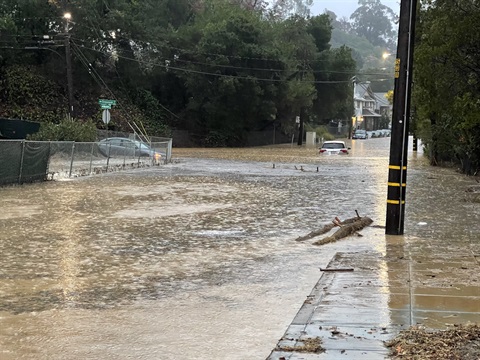
Oakland, CA – Like cities across the world, Oakland’s community and local government are preparing for local impacts from El Nino and its corresponding weather.
What to Expect
The National Oceanic and Atmospheric Administration (NOAA) has released its U.S. Winter Outlook offering assessments nationwide of what weather impacts are expected or possible. It includes projections that from December 2026 through February 2027 winter weather in the Bay Area region will include above normal temperatures and significantly above normal precipitation.
"This winter, El Niño rains and severe king tides pose a significant threat to Oakland," Mayor Barbara Lee said. "The City has been planning and working proactively – clearing storm drains, trimming trees, and preparing emergency response crews to protect our neighborhoods. We urge every resident to prepare now by clearing local drains, picking up free sandbags, and signing up for AC Alert emergency notifications. Together, we will keep Oakland safe, strong, and prepared."
"Our most important resource is time, and right now the City is making the most of our time to prepare -- and encouraging our community to do the same before the heaviest El Nino impacts arrive," Interim City Administrator Betsy Lake said. "My deepest appreciation goes out to all our community leaders and volunteers who are taking the initiative to safeguard their homes and neighborhoods, and to the staff who are going above and beyond to prevent the worst impacts."
Every year, the City Administrator’s Office coordinates across the City departments to prepare for winter storms, and as we look at the potential for significant increase to these storms, we are ramping up those preparations. City crews are in the process of:
- Cleaning storm drains, inlets, culverts and drainage structures
- Laying down plastic tarp and sandbags in areas that have seen previous mudslides or flooding
- Coordinating planning efforts with other agencies in the region
What You Can Do Right Now Outdoors and in Your Neighborhood: Preparedness Tips for Residents and Businesses
Preparing for El Nino is a shared responsibility that needs everyone to take action, including local government, homeowners and business owners, faith and community organizations, property managers, and renters. Simple preparation steps taken now can go a long way toward lessening the impact of El Nino weather-related and other emergencies. We strongly encourage members of the community to review their emergency plans and prepare their families, homes, and vehicles. Here are some suggested simple steps:
- Clear your gutters and downspouts; ensure downspouts are working and pointing away from your house
- Keep your curbs and sidewalk gutters clear of leaves and debris (and please dispose of in your green bins – not sweep them into the gutter)
- Check the storm drain near your house and use a rake to keep it clear of debris (see Adopt-a-Drain information on the next page of this release)
- Check that backflow prevention devices on sewer laterals/cleanouts are functioning properly – or consult a plumber to have one installed.
- Trim trees on your property to help them handle wind and rain; call a certified arborist to inspect your trees if you observe unusual leaning or dead branches
- Check out your local hardware store for flood prevention tools and techniques such as using sandbags to divert water away from your property or prevent it from coming in through doors and basement windows
- Review your property insurance; if you don’t have flood insurance, consider getting it now – it takes 30 days to take effect
- Review emergency procedures and evacuation plans at your children’s schools
- Make sure you have emergency supplies to last for at least three days, including enough water, food, medicine and other supplies for family members and pets
- In the event of flood conditions, please be careful and safe by avoiding walking, riding or driving across standing water
What You Can Do Right Now Indoors at Home
1. Check your heating system
- Before cold weather arrives, have your wall heater, furnace, or other gas heating appliances inspected.
- Call PG&E to check that gas appliances are operating safely.
- Never use outdoor grills or camp stoves indoors.
2. Call PG&E for a safety inspection
- Contact PG&E to request a safety inspection of your gas lines and gas appliances before the rainy and cold season.
- A professional inspection can help identify gas leaks and carbon monoxide hazards.
- PG&E: 1-800-743-5000
3. Keep windows and doors in good condition
- Make sure windows and doors are intact and close properly.
- Check for broken glass, gaps, or damage that could let in rain, cold air, or pests.
4. Check for and report leaks
- Look for roof leaks, plumbing leaks, and water coming in around windows or doors.
- Report leaks to your landlord right away so they can be repaired.
- Prompt repairs can help prevent mold, property damage, and unhealthy living conditions.
5. Make sure smoke and carbon monoxide alarms work
- Test smoke and carbon monoxide (CO) alarms regularly.
- Replace batteries if needed.
- Working alarms can warn you of fire or dangerous gas.
6. Keep air circulation and electrical safety in mind
- Keep furniture at least 2 inches away from walls to allow air to circulate.
- Do not overload electrical outlets or plug too many devices into one outlet.
Guidance for renters
Oakland renters have rights when weather-related issues compromise the habitability or safety of their home.
Guidance for rental property owners
- Talk to your tenants proactively to identify and address any issues in their units that could worsen in the event of severe winter weather.
- If your tenant must move out due to safety issues or repairs, learn about the Code Compliance Relocation Program to understand your responsibilities as a property owner.
- For more resources about providing weather-secure housing and addressing habitability issues, contact the Rent Adjustment Program or East Bay Rental Housing Association.
Emergency Shelter Planning and Outreach to Oakland Encampments
The City is developing plans now for some City facilities to be prepared to serve as emergency shelters should conditions require it. More details about those shelter preparations will be shared as they are available.
Coastal flooding and other El Nino weather may have especially challenging impacts for encampments in Oakland and throughout the region. The City’s encampment outreach partners will be sharing this information directly with encampment residents as well.
Volunteer with Adopt-a-Drain and More Steps to Help Minimize Flooding
Adopt a Drain
Residents and businesses can help minimize flooding in their neighborhood by volunteering with the City’s Adopt-A-Drain program to keep a storm drain near their home or business free of debris. The City’s storm drain system includes more than 7,500 storm drains, of which 1,100 storm drains are currently adopted by Oaklanders. That means there are 6,400 storm drains in Oakland waiting to be adopted. By signing up, you will receive storm notification emails before large storm events, and the City can provide rakes, brooms, dust pans, bags and other supplies. Remember: “Clear the drain before the rain.” To sign up, visit the Adopt-A-Drain program page or call (510) 238-7630.
Free Sandbags
Oakland Public Works provides free emergency sandbags (up to 10 per household) and plastic sheeting (up to 20 feet) to Oakland residents and business owners, while supplies last. These materials can help residents and businesses protect their properties from flooding and stormwater intrusion.
Sandbag and Plastic Sheeting Pickup Locations
1. Municipal Service Center – 7101 Edgewater Drive
- Monday–Friday: 8 a.m.–4 p.m.
- Saturday–Sunday: 8 a.m.–4:30 p.m.
2. Drainage Services Facility – 5921 Shepherd Canyon Road
- Monday–Friday: 7 a.m.–3:30 p.m.
Residents should bring identification to verify Oakland residency and be prepared to fill their own sandbags if needed.
Instructional videos on how to use these materials to best protect your property are available online at www.oaklandca.gov/elnino.
How to Report Flood-Related or Storm-Related Problems
Please keep these numbers handy for emergencies, and share them with neighbors:
For storm-related emergency issues on public property and in the public right-of-way (such as flooding, mudslides, landslides, and manholes overflowing onto streets and sidewalks), contact OAK 311. Dial 311 from any phone within Oakland or call 510-615-5566.
For non-emergencies, OAK 311 can also be contacted in other ways:
For downed power lines or if you smell natural gas, leave the area immediately and then call 9-1-1 or PG&E at 1-800-743-5000.
For power outage alerts go online to pge.com/outagealerts.
For water service emergencies (e.g., no water service, broken hydrants, broken water main pipes), contact EBMUD at 1-866-403-2683.
For life-threatening emergencies, call 9-1-1 from a land line or (510) 777-3211 from a cell phone.
# # #